




Scleral Lenses vs. Traditional Contacts: What’s the Difference?
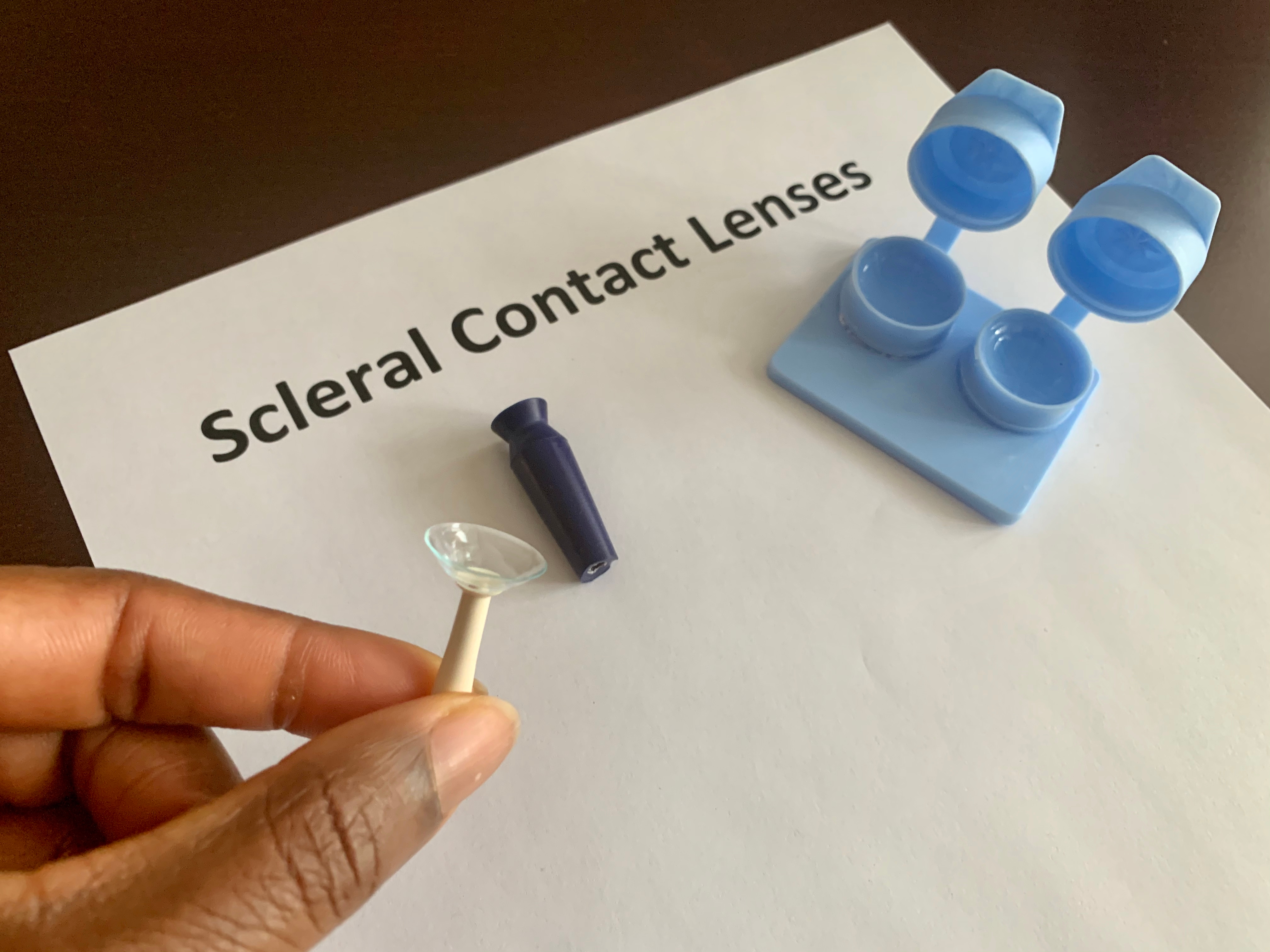
If you wear contact lenses and still struggle with comfort or clear vision, you may be wondering whether scleral lenses could be a better fit. While traditional contacts work well for many people, scleral lenses are designed differently and can solve problems that standard soft lenses often cannot. Understanding the difference can help you choose the right option for your eyes and your lifestyle.
How Traditional Contact Lenses Work
Traditional contact lenses usually rest directly on the cornea, which is the clear front surface of the eye. Soft contact lenses are the most common type and are often used to correct nearsightedness, farsightedness, astigmatism, and presbyopia. They are popular because they are thin, flexible, and easy for many patients to adapt to.
For people with healthy eyes and standard vision needs, traditional contacts can be a convenient choice. They are available in daily, biweekly, and monthly replacement schedules, and many patients find them easy to wear during normal daily activities.
What Makes Scleral Lenses Different
Scleral lenses are larger than traditional contacts and rest on the sclera, which is the white part of the eye, instead of sitting directly on the cornea. Because of this design, the lens vaults over the cornea and creates a space that holds a layer of fluid against the eye.
That fluid reservoir is one of the biggest reasons scleral lenses stand out. It helps keep the eye hydrated and can provide a smoother optical surface, especially for patients whose corneas are irregular or whose eyes are very dry.
Who May Benefit Most From Scleral Lenses
Scleral lenses are often recommended for patients who have more complex vision or eye health needs. They are not always the first option, but they can be life changing for the right person.
Patients who may benefit include those with:
- Keratoconus or other irregular corneas
- Severe dry eye symptoms
- Corneal scarring
- Poor comfort with traditional contact lenses
- Vision that is not fully corrected with standard soft lenses
Because scleral lenses are customized, they can provide clearer and more stable vision in cases where regular contacts fall short.
Comfort and Vision Comparison
Traditional soft contacts are comfortable for many patients, but they can dry out over the course of the day, especially with long screen time or certain environments. Some patients also notice that their vision fluctuates if the lens moves or if the surface of the eye is not smooth.
Scleral lenses often provide more consistent vision because they create a stable optical surface over the cornea. Many patients also report improved comfort because the lens does not rub directly on sensitive corneal tissue. For people with dry eye or corneal conditions, this can make a major difference in day-to-day wear.
Which Option Is Right for You?
The best contact lenses depend on your eyes, your prescription, and your comfort needs. Traditional contacts may be a great option if your eyes are healthy and your vision is straightforward. Scleral lenses may be a better choice if you have ongoing discomfort, dry eye, or a corneal condition that affects your vision.
At Barry Huse OD & Associates, we help patients explore specialty contact lens options, including scleral lenses, to find the best solution for clear and comfortable vision.
To learn whether scleral lenses or traditional contacts are right for you, schedule a contact lens exam at Barry Huse OD & Associates. Visit our office in Tacoma, Washington, or call (253) 473-1050 to book an appointment today.


MAP
© 2026 Barry Huse OD & Associates. All Rights Reserved. Accessibility Statement - Privacy Policy - Sitemap
Powered by: 